CREATIVE AGENCY
Clients hired the founder, not the agency. Every project, every referral, every ounce of trust ran through one personal Instagram account. I built an identity that let the company earn the trust.
A business that couldn't outgrow one Instagram account
The agency did strong work — but structurally it wasn't an agency. It was one person's reputation with employees attached. Clients came for the founder, negotiated with the founder, and trusted only the founder. That ceiling shows up everywhere: the company can't scale sales, can't delegate client relationships, and has no asset value beyond one individual's feed.
This is the same founder-dependence problem as EXODUS — in a different industry, with a different solution.
The founder is the business
- All inbound arrives through one personal Instagram account
- Clients negotiate with the founder and trust only the founder
- Proposals improvised per client — no shared standard
- Company has no asset value beyond one person's reputation
The company carries the trust
- Independent agency identity signals premium before any portfolio opens
- Website sells the studio's standard — not one person's feed
- Presentation system: every proposal on-brand, whoever sends it
- Founder's personal brand becomes one channel, not the single point of failure
Where the trust moved
Founder's Instagram
The old front door — personal, unscalable, unsellable
Agency Identity
Positioning and visual language that stand on their own
Website + Presentation System
Every touchpoint carries the same premium signal, regardless of sender
Clients trust the company
The team can sell, present, and deliver — founder optional
Move the trust from the person to the company
- Positioning — define what the studio stands for as an entity: a premium creative studio, not "the founder's team."
- Identity — a visual language that signals luxury-tier quality before a single portfolio piece is opened.
- Website — a home for the studio's work and voice, independent of any personal account.
- Presentation system — templates for proposals and client decks, so every touchpoint carries the same premium signal regardless of who sends it.
Luxury is restraint, applied consistently
Premium positioning fails when it's decorative. The identity was built on restraint — refined typography, disciplined spacing, a controlled palette — applied with total consistency across the logo system, website, and presentation materials.
- Brand strategy before visuals — audience, differentiation, and verbal tone defined first, so the identity had something to express.
- System over artifacts — rules for type, color, layout, and imagery, so the studio team produces on-brand materials without the founder approving every asset.
- Website as proof of taste — the site itself demonstrates the studio's standard: if they present themselves this well, they'll present the client well.
- Presentation templates as sales infrastructure — proposals stopped being improvised documents and became branded, repeatable assets.
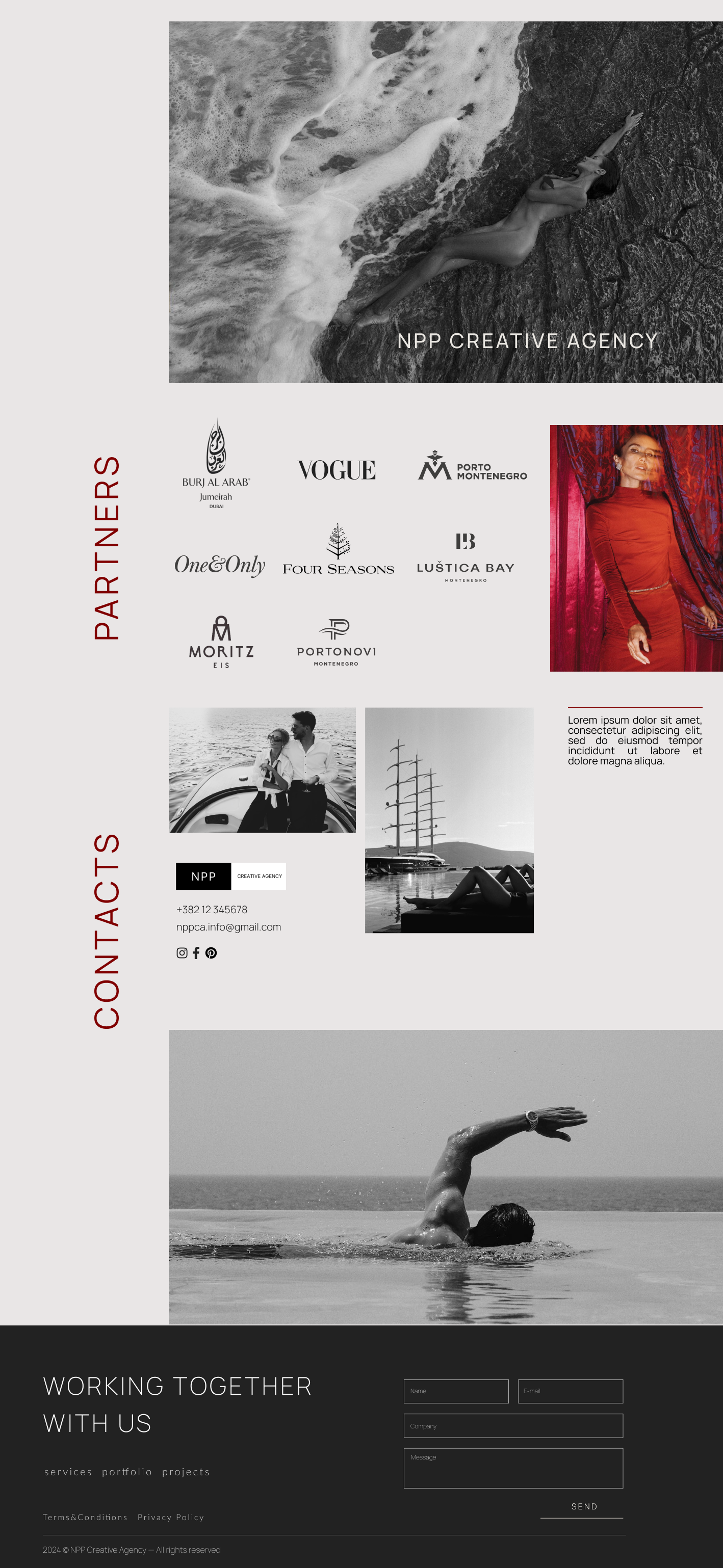
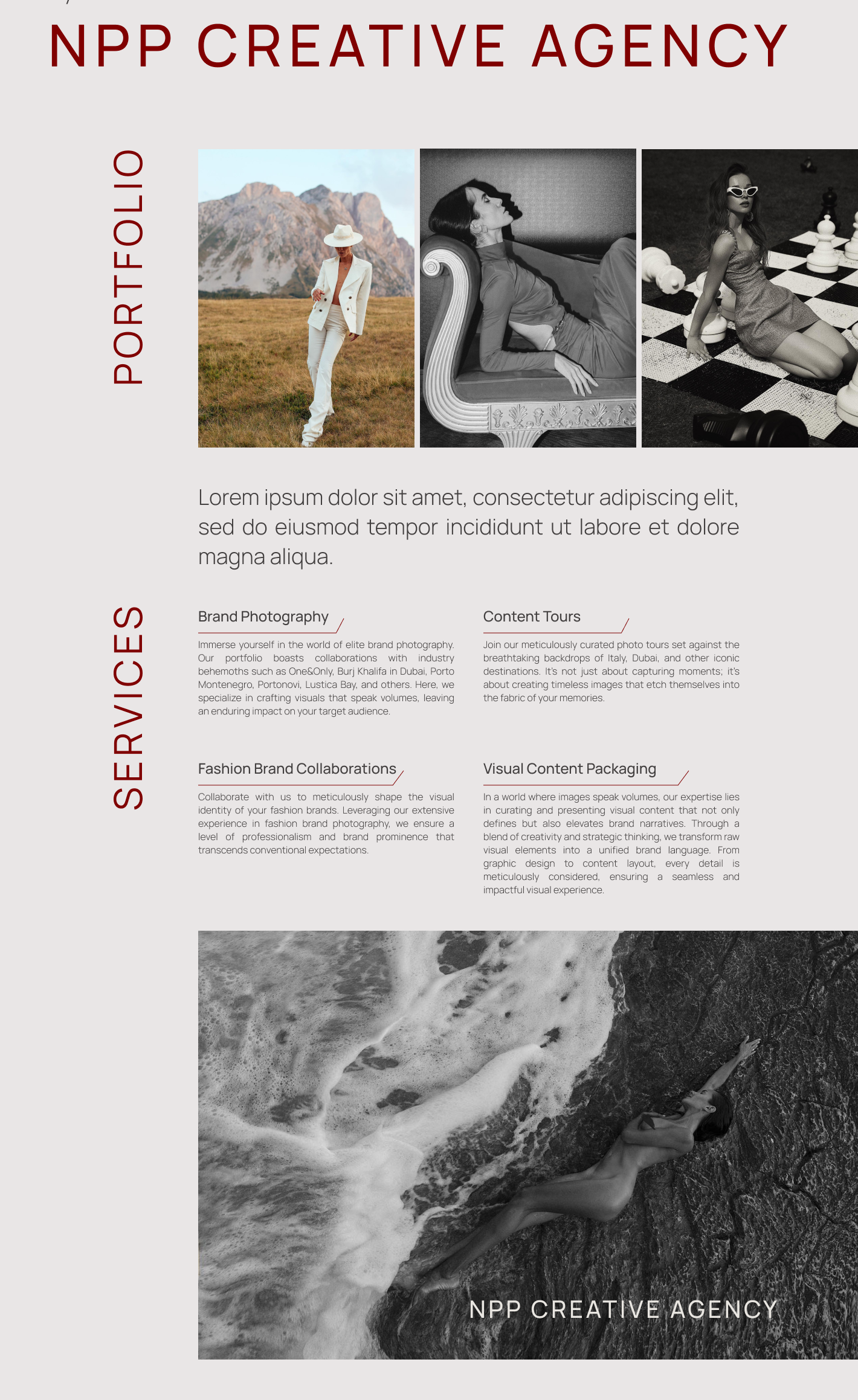
- Monochrome base — premium reads through discipline, not effects
- One bold accent — recognition without noise
- Editorial grid — the site itself demonstrates the studio's standard of presentation

A studio clients could trust without meeting the founder
The rebrand gave the business what a personal account never could: an independent identity that carries trust on its own. The founder's personal brand became one channel among several instead of the single point of failure — and the studio gained the infrastructure (site, identity, presentation system) to sell as a company.
"Clients used to hire a person. Now they hire a studio that happens to have a great founder."
The studio name is withheld under NDA — the strategy, system, and visual language are shown in full.
Role
Brand strategy, identity, website, presentation system
Team
Founder + studio team; design direction owned end-to-end
Deliverables
Positioning, identity system, premium website, proposal templates
Status
Shipped — identity + web live
Identity is an organizational tool
The deliverable looked like branding, but the job was organizational: redistributing trust so the business could scale past its founder. When identity work starts from that framing, every design decision has a measurable purpose — even in a discipline famous for taste-based arguments.
Related projects: Social Organizer, Identity Systems in the Design Archive.
Why it was built this way
Strategy written before any visual
ReasonAn identity with nothing to express is decoration. Positioning, audience, and verbal tone were agreed first, so the visuals had a job.
Restraint as the luxury signal
ReasonPremium reads through discipline — monochrome, one accent, generous space — not through effects.
Presentation templates as sales infrastructure
ReasonProposals were the real revenue surface. Templates moved the premium signal from the founder's hands to the whole team's.
The founder becomes a channel, not the brand
ReasonTrust had to survive delegation. The identity carries it; the founder amplifies it.